
Cryptocurrency, Illustrated: What It Is and How It Works
A visual guide to how cryptocurrency works, the main types, and why the deposit network matters.


Maybe a friend mentioned Bitcoin, maybe you saw a token surge in the news, or maybe you want to deposit some USDC into MC Markets and start trading. Wherever you are starting from, one thing comes first: what is the actual difference between cryptocurrency and the money in your bank account?
This article covers the basics in four pictures: how it differs from fiat, how it works, the main types, and why you must pick the right network when depositing.
1. How It Differs from Money in a Bank
Cryptocurrency is a digital asset that runs on blockchain technology. It uses cryptography for security and is maintained by a distributed network of computers worldwide. No single institution (such as a central bank) can control it.
Compared to traditional fiat currencies there are three fundamental differences. Issuance — fiat is printed based on central bank policy decisions, while cryptocurrency is issued by fixed rules. Ledger — fiat is recorded by a single bank, while cryptocurrency is recorded by many nodes. Control — fiat is controlled by a single body, while cryptocurrency has no owner.
Transfer paths differ too: international bank transfers go through the SWIFT system, typically taking 1-3 business days; cryptocurrency is completed directly on a peer-to-peer network, usually settling within minutes.
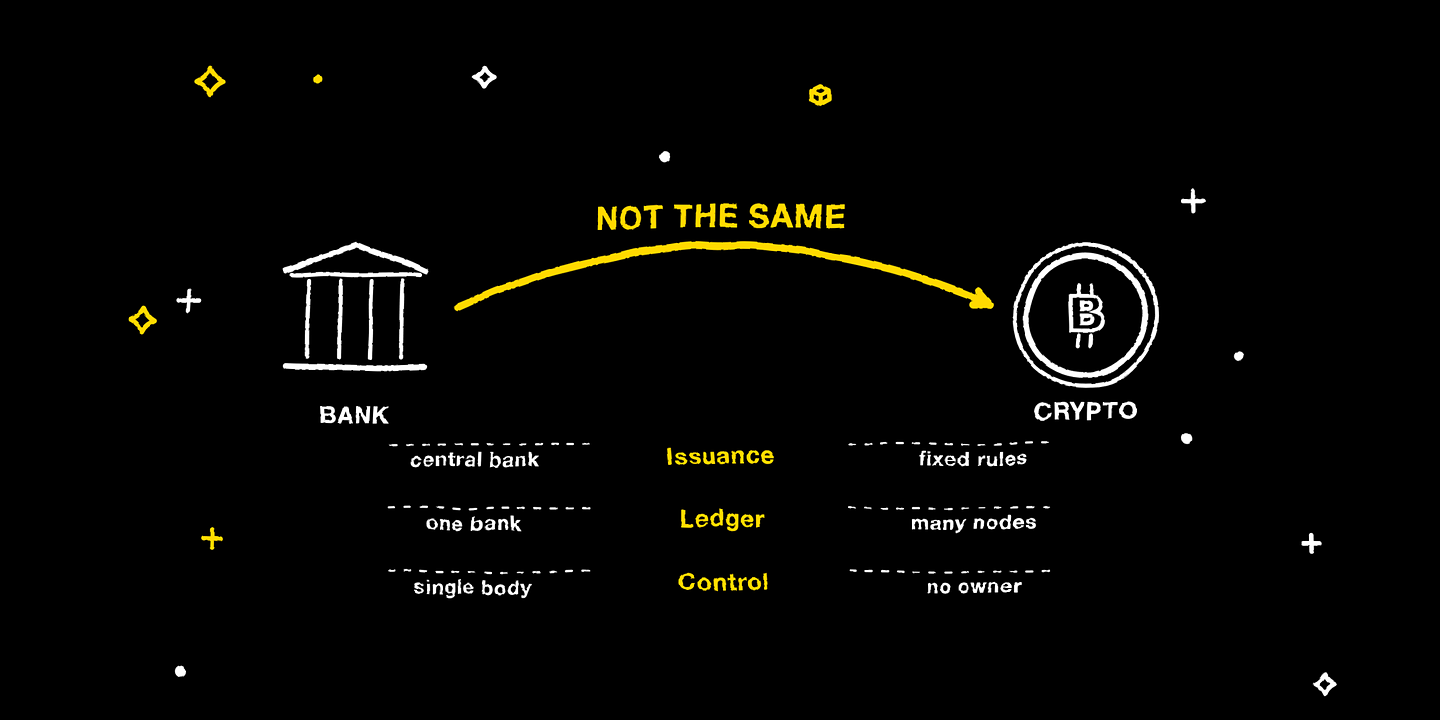
Simple summary: decentralized, immutable, publicly transparent, and pseudonymous — these four words capture the core characteristics of cryptocurrency.
2. How Does It Work?
Without a central bank managing affairs, cryptocurrency operates through four coordinated mechanisms.
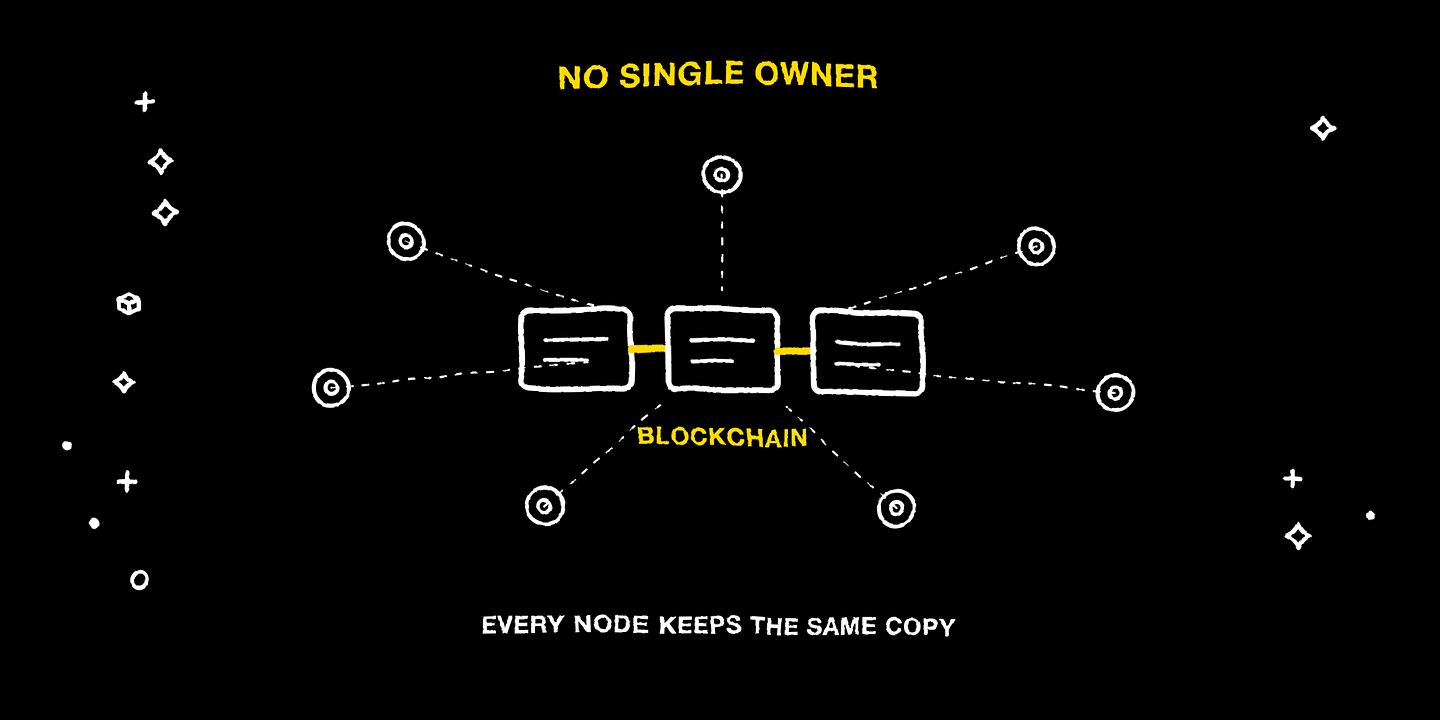
Blockchain ledger — all transaction records are stored on a globally shared ledger. The network packages transactions within a period into "blocks" and chains these blocks in chronological order. Bitcoin produces a block approximately every 10 minutes, while Ethereum is approximately every 12 seconds.
Cryptographic signatures — each transaction requires the holder to sign with a private key, and the network then verifies it with the corresponding public key. Without the private key, you cannot move the asset.
Consensus mechanism — who has the right to write new blocks to the ledger is determined by the consensus mechanism. There are currently two main types: Proof of Work (PoW) and Proof of Stake (PoS).
Peer-to-peer network — transactions are transmitted directly between global nodes without going through central servers. The overall operation is unaffected if any single node goes offline.
3. Main Types of Cryptocurrency
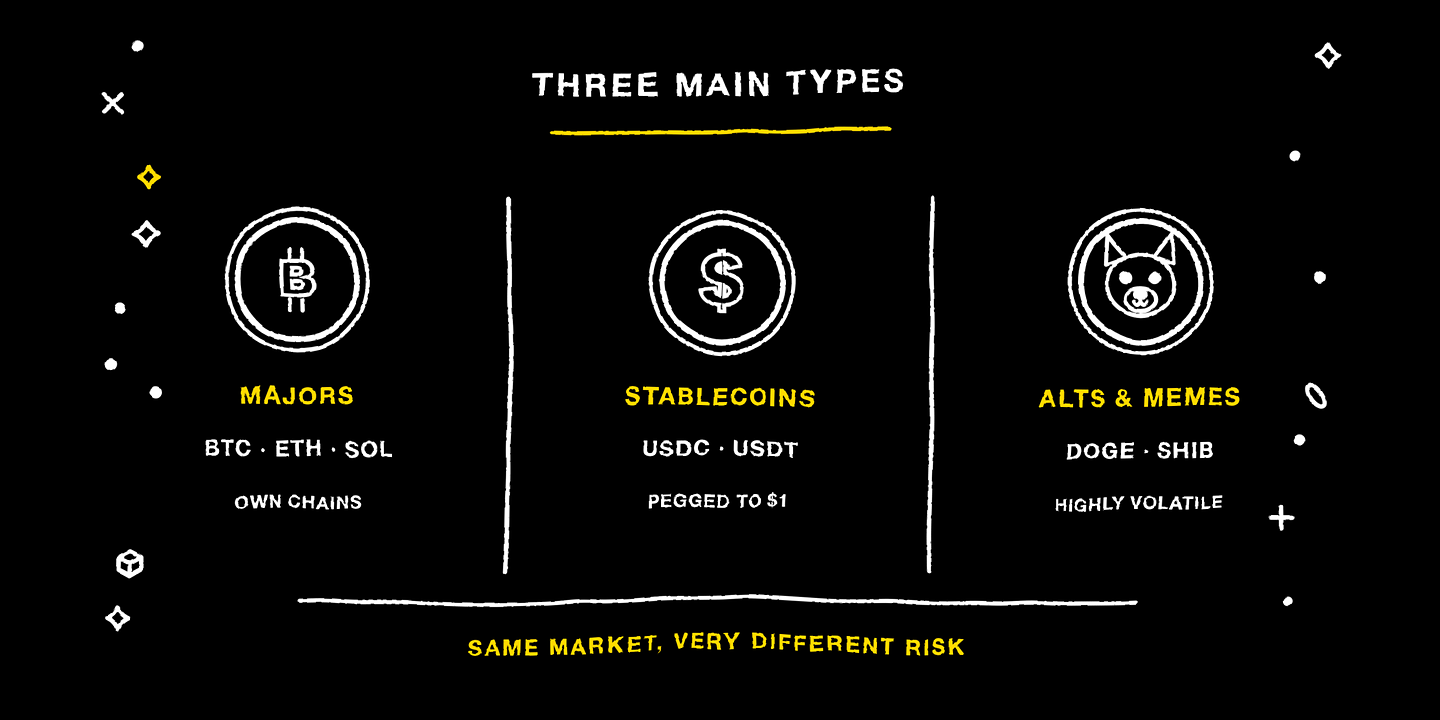
Major coins — BTC, ETH, SOL and others. They have independent public chains, high market cap rankings, and widespread institutional adoption. These are also the main deposit and withdrawal currencies.
Stablecoins — cryptocurrencies pegged to the US dollar with extremely low price volatility. USDC is issued by Circle and regularly publishes reserve audits; USDT is issued by Tether.
Altcoins and meme coins — the general term for everything other than major coins. Meme coins (such as DOGE, SHIB) are primarily driven by community sentiment, with extremely high price volatility.
4. Why Do You Need to Select a Network When Depositing?
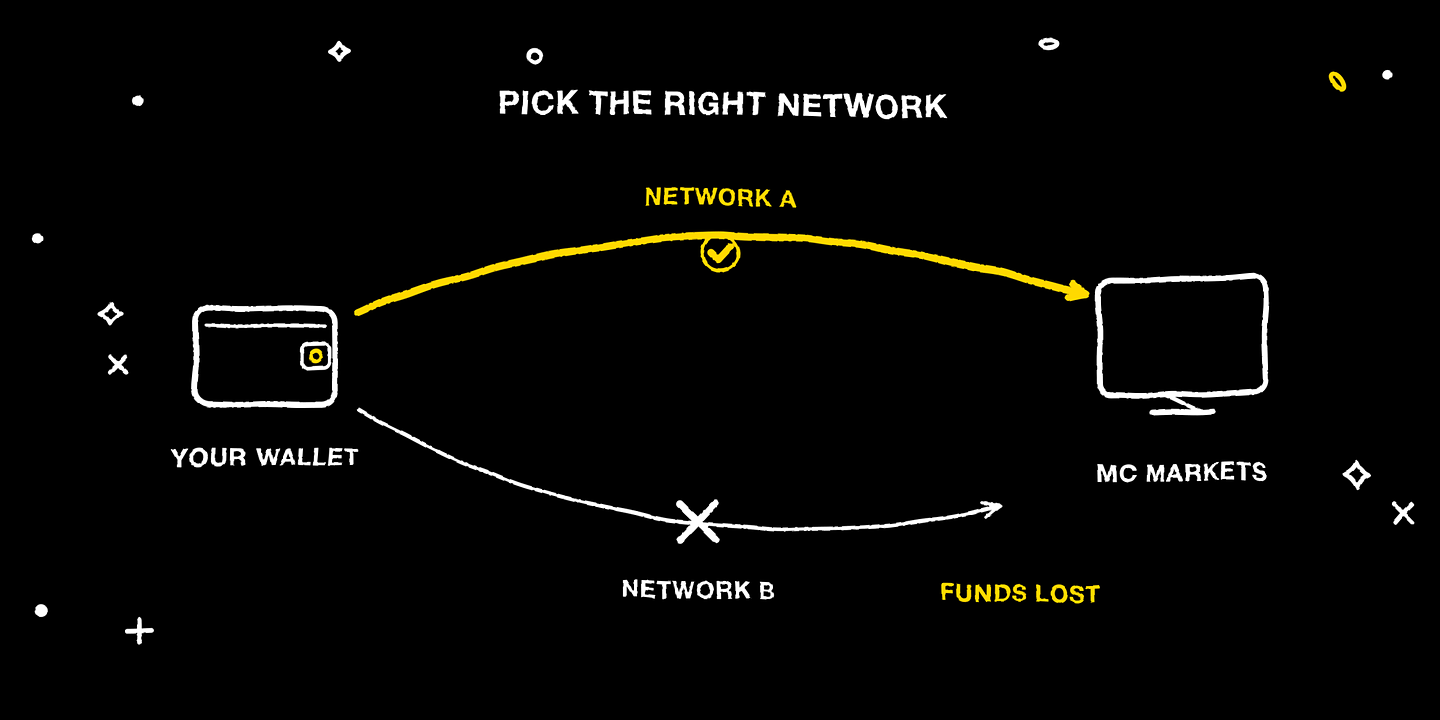
The same token can be issued on multiple chains. Taking USDT as an example: TRC20 runs on the Tron chain, ERC20 runs on the Ethereum mainnet, and there are also versions running on Arbitrum.
Key principle: the sending network must exactly match the network displayed by the receiving platform. If you choose incorrectly, funds will enter the wrong chain, and the platform cannot assist in recovering them.
5. Operating Logic on MC Markets
The entire fund flow is divided into four steps: Deposit (transfer from external wallet, assets credited to spot account) → Transfer (USDC in spot account instantly transferred to contract account for free) → Trade (spot buying or contract opening) → Withdraw (initiated from spot account, withdrawal fees as shown on the page).
Quick Review
Cryptocurrency is a digital asset running on blockchain — decentralized, immutable and publicly transparent. It works through four mechanisms: the blockchain ledger, cryptographic signatures, the consensus mechanism and the peer-to-peer network. Major coins, stablecoins and altcoins differ in use and in risk. When depositing, the sending network must exactly match the one the platform displays.
Further Reading
What is Cryptocurrency and How Does It Work?
Risk Warning
Cryptocurrency trading involves significant market risks, including the possibility of extreme price volatility and loss of principal. Once confirmed, on-chain operations are irreversible. The platform rules described in this article are subject to MC Markets' official documents; any updates will follow the latest announcements. Please only participate in trading with funds you can afford to lose.
No more