
Why Doesn't the Fill Price Match What You Expected?
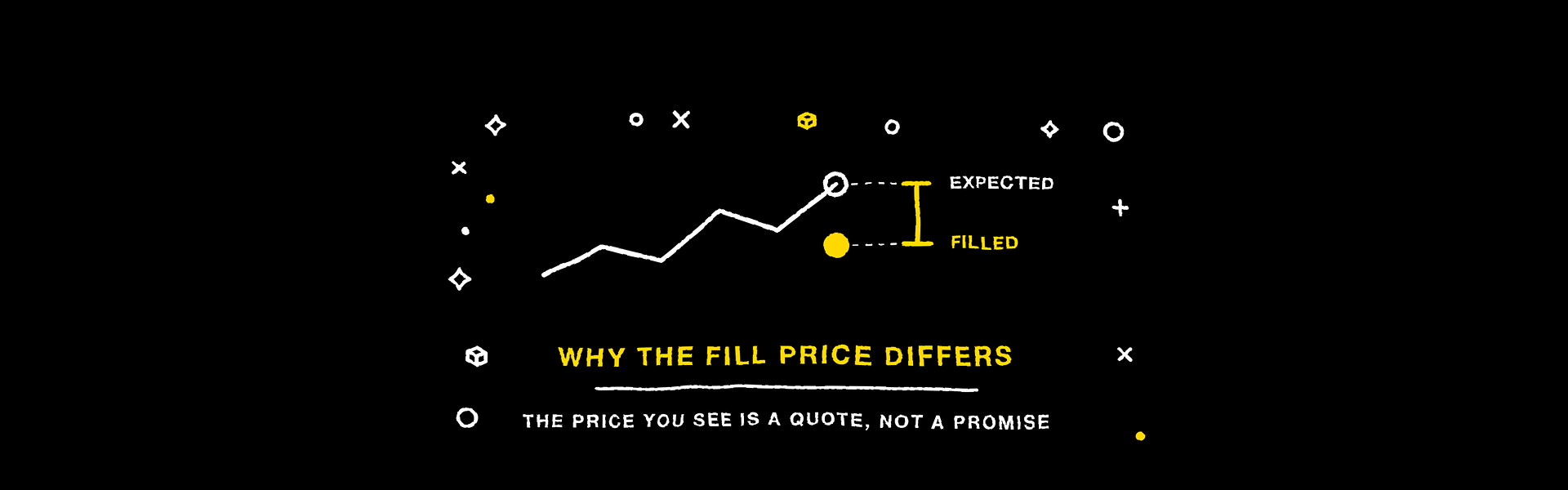
At any moment the market has at least four prices. Your trade happens in the cracks between them.

Introduction
Most people take “the price” to mean that one number ticking on the candlestick chart. But in a real market the best bid, best ask, mid price, and mark price all exist at once — understand the gaps between them, and “how well you filled” stops being a matter of luck.
1. The Order Book: Two Columns of Queued Orders
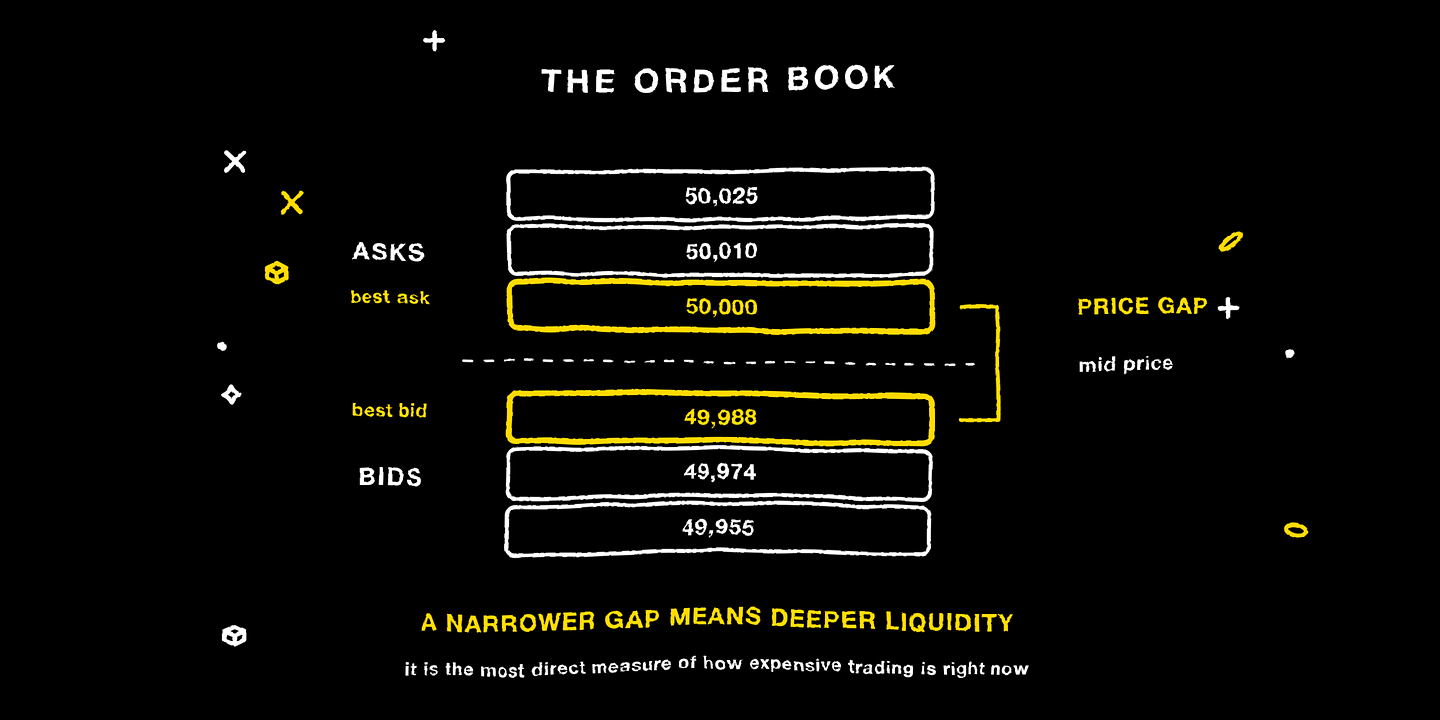
The order book is two columns of resting orders sorted by price: the buy side runs from high to low, with the best bid at the top (the buyer willing to pay the most); the sell side runs from low to high, with the best ask at the top (the seller most willing to give way). Mid price = (best bid + best ask) ÷ 2; when the two sit close together, liquidity is ample; when they sit far apart, liquidity is thin or the market is violent — it's the most direct gauge of “how expensive it is to trade right now.”
2. Depth: Below the Surface
The best bid and ask are only the surface of the order book; behind them sits layer after layer of orders at progressively worse prices — this is market depth. An analogy: buying one cabbage means paying the sticker price, but buying out the whole stall means negotiating stall by stall at rising prices. The larger your order, the deeper it “eats” into the order book, and the worse your average fill price. A liquid market is essentially one that “can absorb a large order without visibly moving the price.”
3. Impact Cost: The Hidden Price Tag of Size
Let's work it with numbers. Suppose the order book has: best ask $50,000 for 0.5 BTC, second ask 50,010 for 1.0 BTC, third ask 50,025 for 2.0 BTC. You market-buy 2 BTC, actually filling up through all three levels, for an average fill of 50,011.25 — 11.25 more per BTC than the best ask you saw when you clicked. That difference is the impact cost. It doesn't appear on your fee statement, only as a worse average fill price, and it grows non-linearly with “order size ÷ order book depth.”

4. Mark Price: The Fair Referee
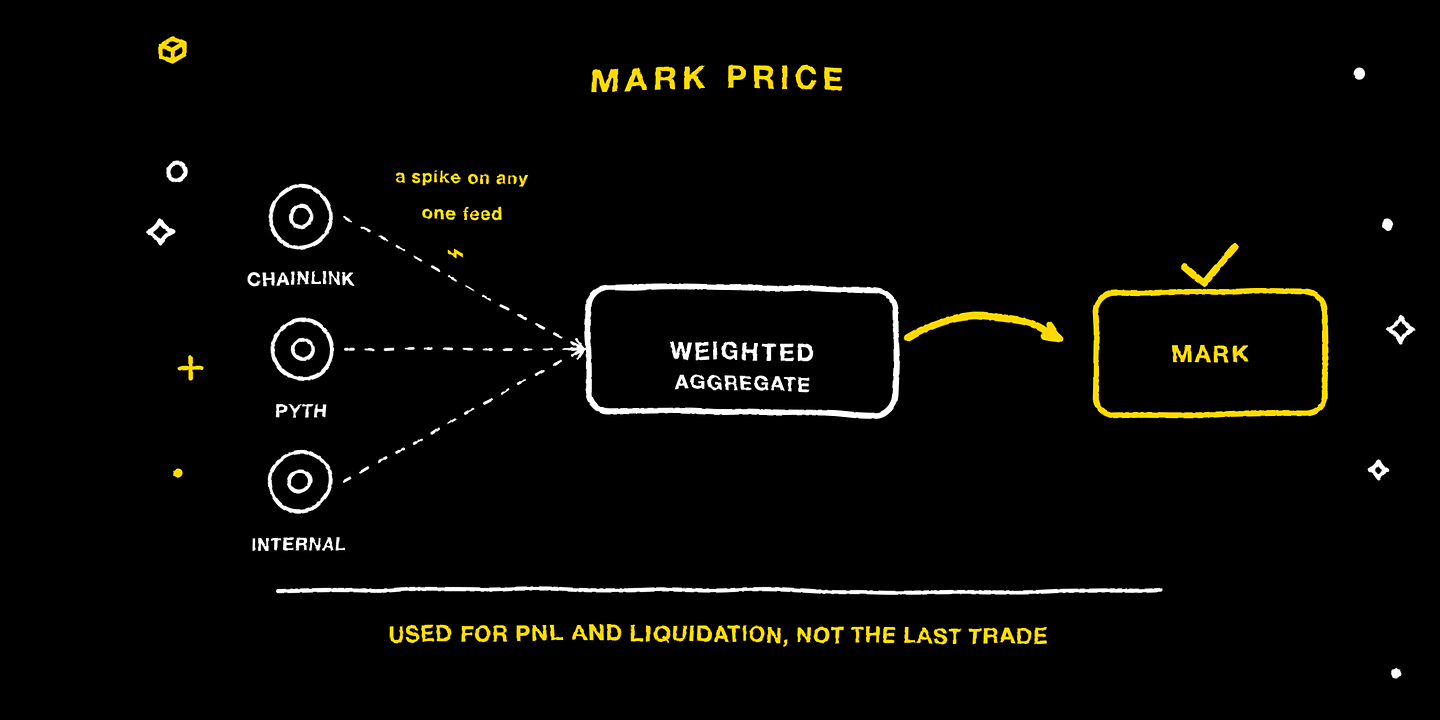
The Mark Price is the fair reference price the platform uses for PNL calculation and liquidation decisions, produced by a weighted aggregation of multi-source oracle prices such as Chainlink and Pyth together with the platform's internal data. Why not use the last traded price? Because the last price can be pushed off in an instant by a single abnormal large order — multi-source aggregation makes the mark price resistant to anomalous swings in any single data source. In a violent market you'll see the mark price and last price diverge — that's exactly it protecting your position from being harmed by an abnormal trade.
5. Slippage Protection
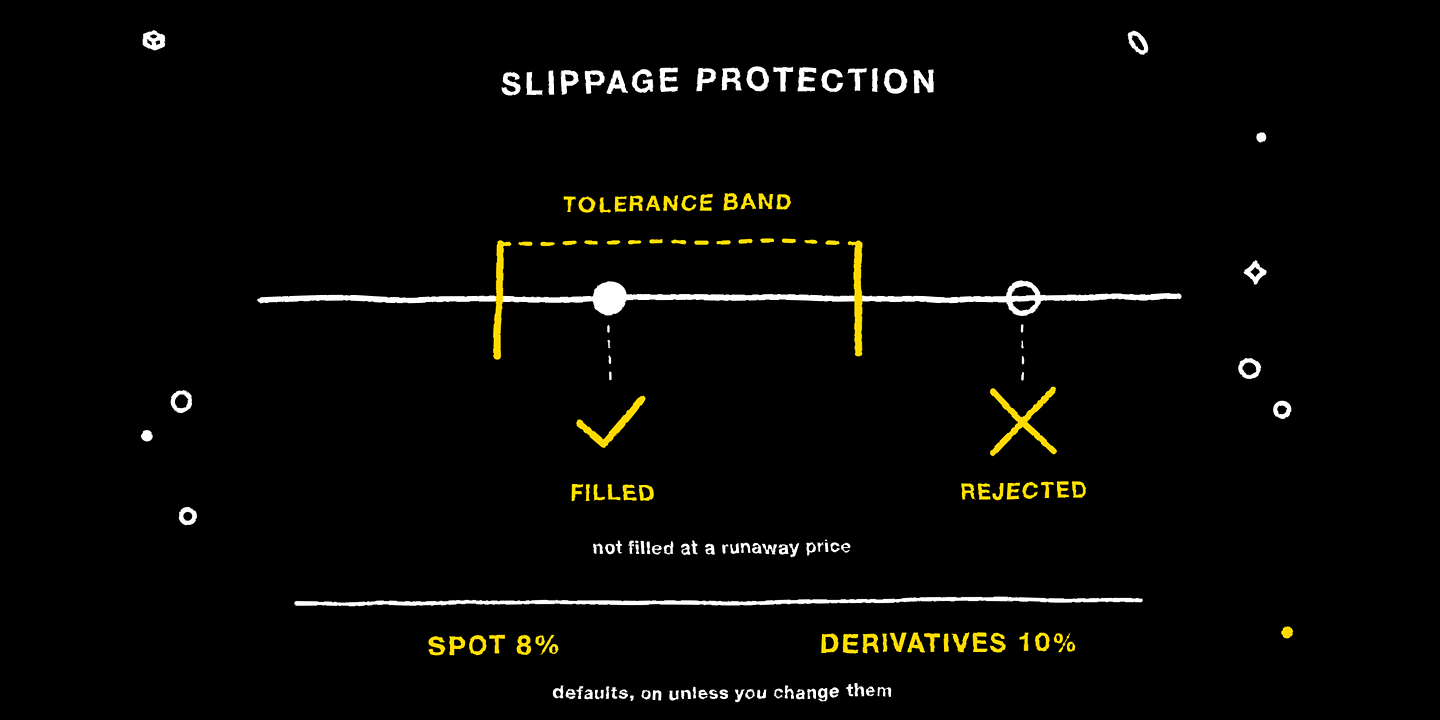
Your fill price can land away from the price you expected, for two reasons: first, the market has already moved in the time between your click and the order being matched; and second, your order ate through the order book. The platform provides slippage protection — if the deviation exceeds the tolerance you set, the order is rejected rather than filled at an out-of-control price. On MC Markets, this protection is on by default. Default slippage tolerances: 8% for spot trading, 10% for derivatives — contracts are more volatile, so the tolerance is a bit wider. You can also tighten it manually; if you set it tight, the chance of a rejected order in a violent market is higher.
6. Four Habits for Trading With the Mechanism
Use limit orders for large trades where possible (place the order near the mid price, don't proactively pay the full impact cost); look at several levels of depth before ordering, not just the top level; split large orders into smaller ones and place them in batches; and avoid the instant of major data releases — wait 30 to 60 seconds and enter after pricing and depth recover.
FAQ
Q: Why is my market order's average price worse than what I saw when I clicked?
A: Your order exceeded the quantity at the best level and ate through the order book level by level — that's the impact cost, and the larger the order, the more pronounced it is.
Q: Between the mark price and the last price, which one counts?
A: Both PNL calculation and liquidation decisions use the mark price. The last price is merely the record of the most recent trade.
Quick Recap
How close the best bid and ask sit is a direct gauge of “how expensive it is to trade right now”; impact cost isn't on your statement, only hidden in the average price; the mark price is a multi-source aggregated fair referee; slippage protection defaults to 8% for spot and 10% for derivatives. For large orders, use limit orders, look at depth, split small, and avoid the data-release instant.
Further Reading
What Is Spot Trading? A Complete Beginner's Guide
Risk Warning
Specific parameters such as default slippage-protection values are subject to the latest version of the official documentation.
Disclaimer
This article is for general informational and educational purposes only and may not apply to the regulations or products available in your region. It does not constitute investment, financial, or trading advice of any kind, nor an offer, solicitation, or recommendation to buy, sell, or hold any digital asset.
Trading digital assets involves high risk, prices can be extremely volatile, and you may lose all of your invested capital. Leveraged trading can result in losses exceeding your initial deposit. Past performance is not indicative of, and does not guarantee, future results.
You should make investment decisions independently based on your own financial situation and risk tolerance, and consult a licensed professional adviser where necessary. While we strive to ensure the accuracy of the information in this article, MC Markets accepts no liability for any errors or omissions, or for any loss you may suffer from using or relying on this information.