
What Is the MLP Vault? Deposit USDC to Share the Platform's Fees
On the platform, most people are the ones paying fees. MLP flips the role: you become the one collecting fees.


1. What Is the MLP Vault?
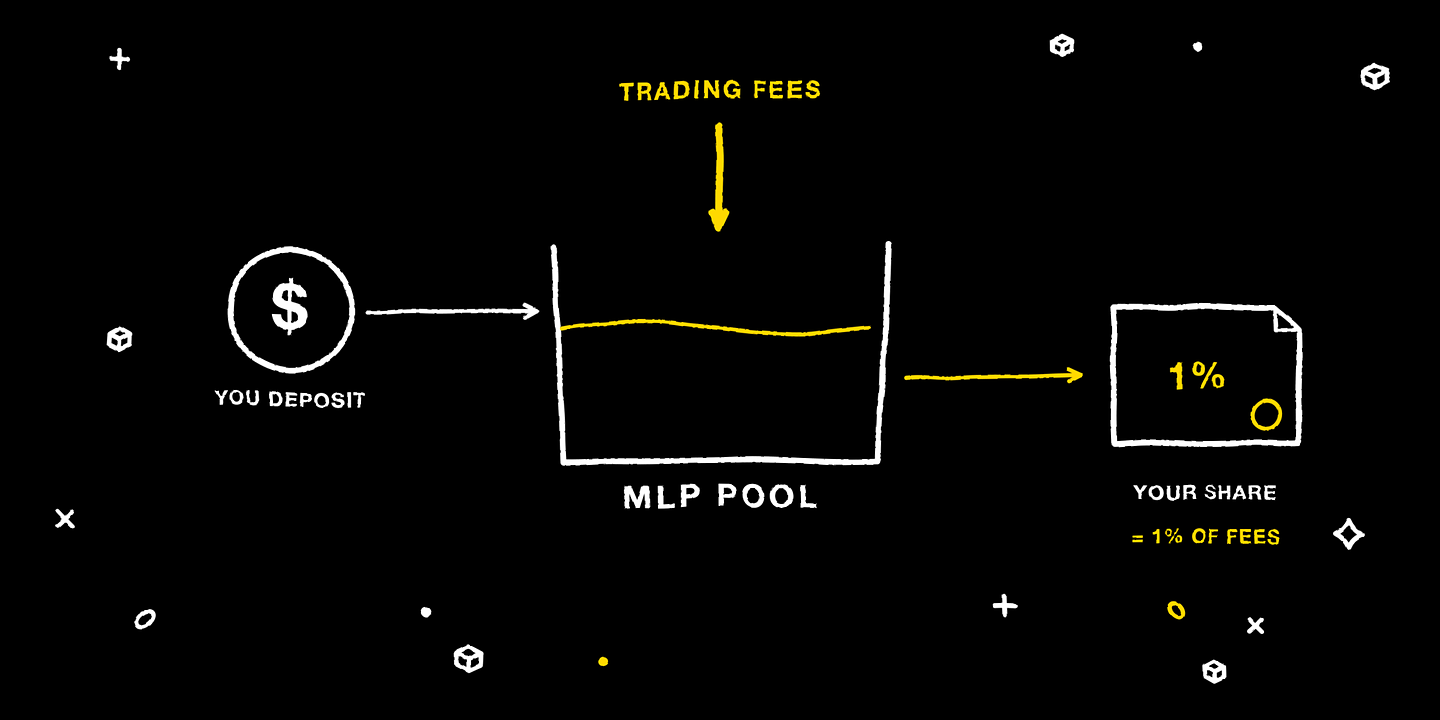
MLP is the platform's USDC liquidity pool: depositors become liquidity partners, providing a funding backstop for the platform's trading activity, and share in income such as trading fees according to their share. An analogy: you invest to take a stake in a thriving shop — the more the shop earns, the more you get in dividends; when business is slow, the dividends are smaller. This is a dividend, not fixed-deposit interest.
2. How Much Can You Get? Three Variables
The platform's fee income (the more active the trading, the more the pool receives), your share proportion in the vault (on depositing you receive a certificate representing ownership; hold 1% and you get 1%), and how long you keep it in. Because the yield comes from real economic activity, the APR fluctuates over time — looking at the rolling APR over the past 7 or 30 days is far more honest than a headline number.
3. T+1 Simple Interest
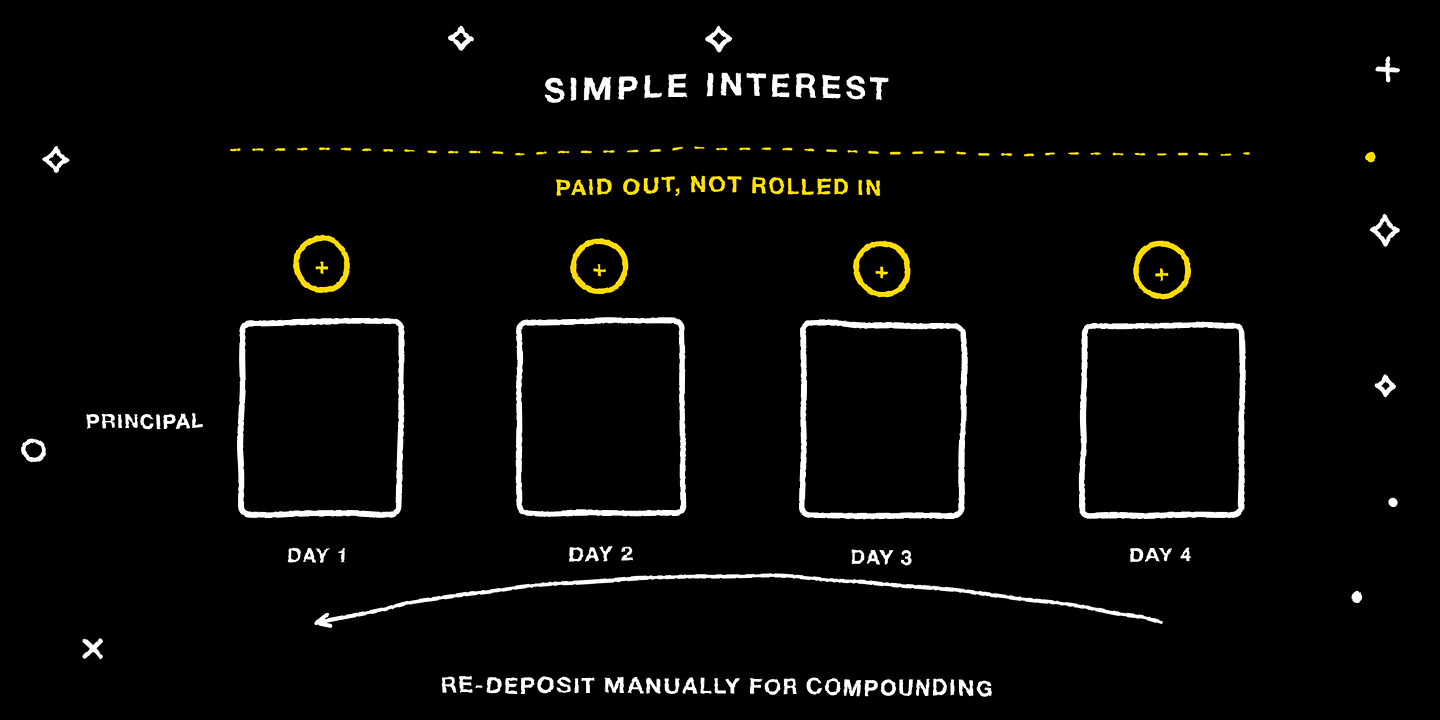
The yield generated on day T is settled and credited at UTC 00:00 the next day. Simple interest means: interest is calculated only on your principal and is not automatically compounded. To get a compounding effect, just manually re-deposit the credited interest.
4. Why Does the 4-Day Lock-Up Exist?
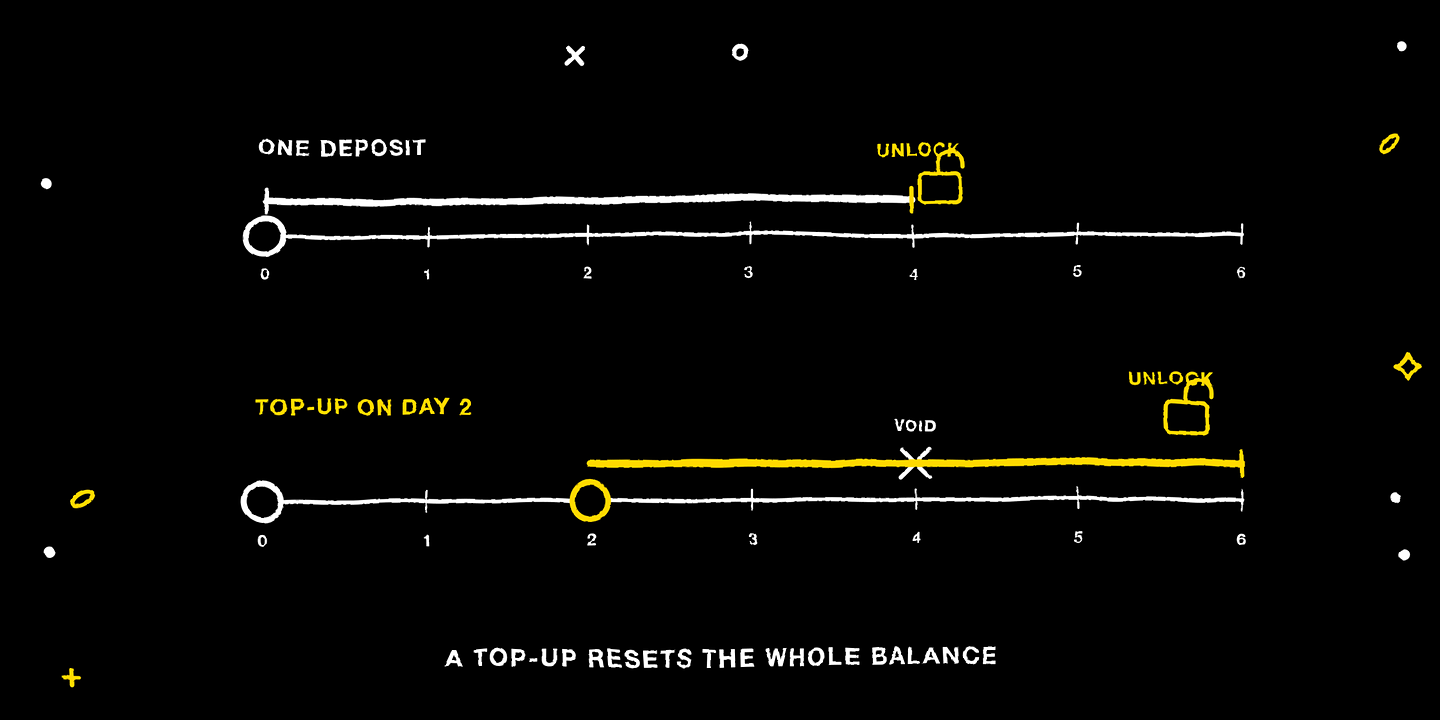
After depositing, funds are locked for 4 days before they can be withdrawn. The reason is straightforward: if depositors could pull their money out instantly at moments of market stress, that money wouldn't count as “reliable liquidity” — the lock-up is the precondition for the premium yield to exist. One easy pitfall: if you add a deposit during the lock-up, the unlock time for your entire balance is recalculated from the latest deposit.
5. The Real Risks
You need to see all three clearly. Floating yield: there's no floor APR, and when the market is quiet the yield is noticeably below the recent average. Drawdown risk: the vault uses active strategies, and in extreme market conditions its net value can experience a short-term drawdown — yield is not guaranteed, you may lose part or all of your principal, and losses are not compensated. Liquidity risk: the 4-day lock-up is non-negotiable, and during it you can't use this money for margin top-ups, seizing opportunities, or emergencies.
The platform also maintains the HSF (Hedging Strategy Fund) as an independent risk-control fund that manages overall risk and operates in tandem with MLP. Vault assets are fully isolated from your trading positions, and transfers are instant and free.
6. Who It Suits, and Who It Doesn't
Suits: those with USDC they won't touch for at least 4 days, who can accept floating yield and possible drawdowns, and who want a passive position that tracks the platform's activity. Doesn't suit: active traders (this money may be needed for margin at any time), those who absolutely can't accept a drawdown (go to Earn), and those who need the money that day or the next. The cleanest test: “Can I comfortably leave this money in for more than 4 days and stomach the volatility?” If the answer isn't a clear “yes,” deposit less or use Earn instead.
FAQ
Q: How does it differ from Earn?
A: Earn has no lock-up, low risk, lower yield, and supports five assets; the vault has a 4-day lock-up, medium risk, higher yield, and only takes USDC. For a full comparison, see “Earn vs. the MLP Vault: How to Choose.”
Q: Can I see the yield during the lock-up?
A: Yes. Your balance and accrued yield can be checked anytime; you just can't withdraw.
Quick Recap
MLP = deposit USDC to be a liquidity partner and share the platform's fee income. T+1 simple interest, 4-day lock-up (adding recalculates it). The yield is real but floats, and in extreme conditions there can be a drawdown. Only deposit money you can comfortably leave for the entire window.
Risk Warning
The vault uses active strategies; yield is not guaranteed, you may lose part or all of your principal, and losses are not compensated. Before depositing, make sure you understand and accept the risks; mechanics and limits are subject to the vault page.
Further Reading
What Is Earn (Flexible Savings)? An Interest-Bearing Account You Can Deposit and Withdraw Anytime
Earn vs. the MLP Vault: How to Choose? Five Differences and One Decision Tree
Disclaimer
This article is for general informational and educational purposes only and may not apply to the regulations or products available in your region. It does not constitute investment, financial, or trading advice of any kind, nor an offer, solicitation, or recommendation to buy, sell, or hold any digital asset.
Trading digital assets involves high risk, prices can be extremely volatile, and you may lose all of your invested capital. Leveraged trading can result in losses exceeding your initial deposit. Past performance is not indicative of, and does not guarantee, future results.
You should make investment decisions independently based on your own financial situation and risk tolerance, and consult a licensed professional adviser where necessary. While we strive to ensure the accuracy of the information in this article, MC Markets accepts no liability for any errors or omissions, or for any loss you may suffer from using or relying on this information.
No more